

We are particularly proud of the fact that our furniture often stood - and still stands - in the most progressive schools of their time. Reason enough to trace the exciting path for you in the VS School Museum.
Visit the permanent exhibition ‘The classroom from the end of the 19th century to the present day’ at the company headquarters in Tauberbischofsheim.
We have not only brought together school furniture from over 100 years, but also architectural models, historical photos, learning materials and educational manifestos. They form a kaleidoscope that illustrates the development of the classroom in the permanent exhibition and an extensive catalogue.
The school museum was created in 1998 to mark the 100th anniversary of VS.
Opening hours:
By appointment only
Registration:
Tourist Information Tauberbischofsheim
Tel. +49 9341 803-1010
Cost:
Guided tour: €60 for up to 25 people, €2 for each additional person, max. 50 people. Guided tours in English €20 surcharge
Cultural history of the school
What characterises the VS School Museum? Prof Dr Thomas Müller, Managing Director of VS from 1987 to 2018, now Chairman of the Shareholders' Meeting, presents the concept:
Away from the barracks school - school reform around 1900
Monastery and barracks: these were the two models for schools in the 19th century. But this changed with the life reform movement around 1900.
New goals and teaching methods were introduced and school buildings and facilities changed. In addition to theoretical mental work, manual labour also became more important; new findings on hygiene and ergonomics drove the reforms forward.
And production also moved with the times: in order to meet the great demand, school furniture was soon manufactured industrially rather than by hand.
Air and sun - The 1920s to 1930s
After the collapse of school furniture production during the First World War and the years of inflation, school reformers and socially committed politicians in the Weimar Republic endeavoured to find progressive solutions again.
This resulted in striking school buildings in the New Objectivity style. A short time later, the global economic crisis set school construction and school furniture production back again.
The child at the centre - international progress until 1945
The rise to power of the National Socialists in 1933 put an abrupt end to democratic reform efforts in Germany. However, the school reform movement continued to develop internationally.
A ‘pedagogy from the child’ shifted the focus to single-storey pavilions that could be opened quickly and easily for outdoor lessons.
Hope for a new beginning - school after the Second World War
After the Second World War, 60 per cent of schools in Germany were destroyed. At the same time, the number of pupils increases due to refugees and displaced persons. Financial resources and raw materials are scarce. It was not until 1950, with the economic miracle, that the hope of a new beginning was linked to school construction.
The open-air school once again became a symbol of liberation, and the French reconstruction plan for Mainz envisaged a school modelled on the famous open-air school in Suresnes (France).
For cost reasons, however, more compact schools soon prevailed, some of which incorporated the principles of the reform movement. A fundamental reorientation of the school system suffered repeated setbacks. The development also continued internationally.
Equal opportunities - the awakening of the 1960s/1970s
In this era of the school building boom and educational reforms, the comprehensive school emerged as a new type of school in the Federal Republic of Germany. It aims to promote equal opportunities for children and young people from all social classes. It was never widely accepted by the public as a ‘bureaucratic learning factory’.
At the same time, other school buildings are also being built. School furniture should now be as flexible, light and stackable as possible.
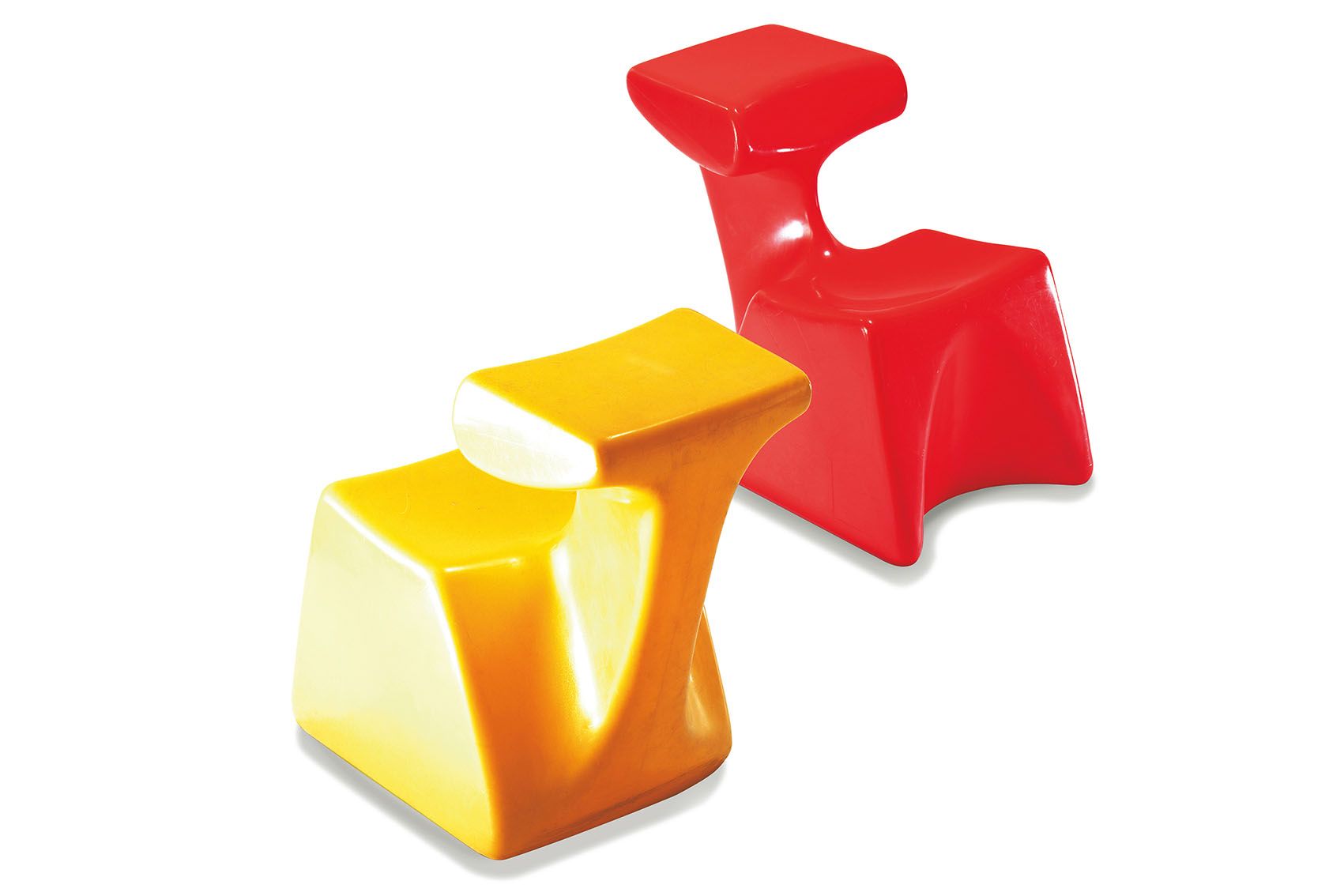
School furniture by Luigi Colani
New materials and an imaginative wealth of shapes characterise many seating designs of the 1970s.
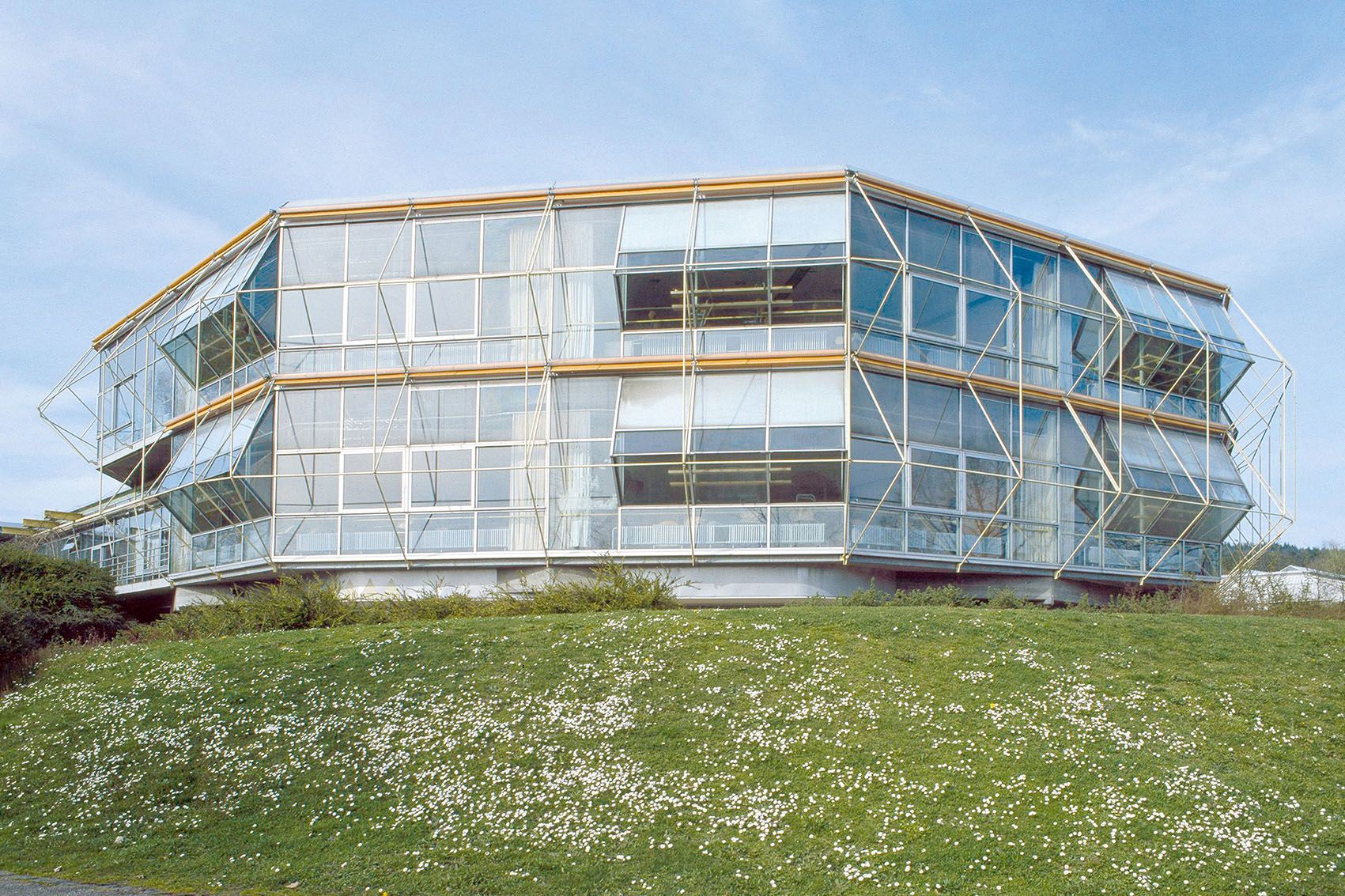
Behnisch & Partner: Schools on the Schäfersfeld in Lorch (1971 - 1973)
Günter Behnisch, one of the most prominent school architects in Germany, is bucking the trend of heavy and opaque comprehensive schools. In Lorch, a light school and sports centre ensemble has been created that blends gracefully into its surroundings. Large glass windows and exposed sun sails characterise the outer façades of the Progymnasium. The centre is an open hall around which the pentagonal classrooms are grouped.
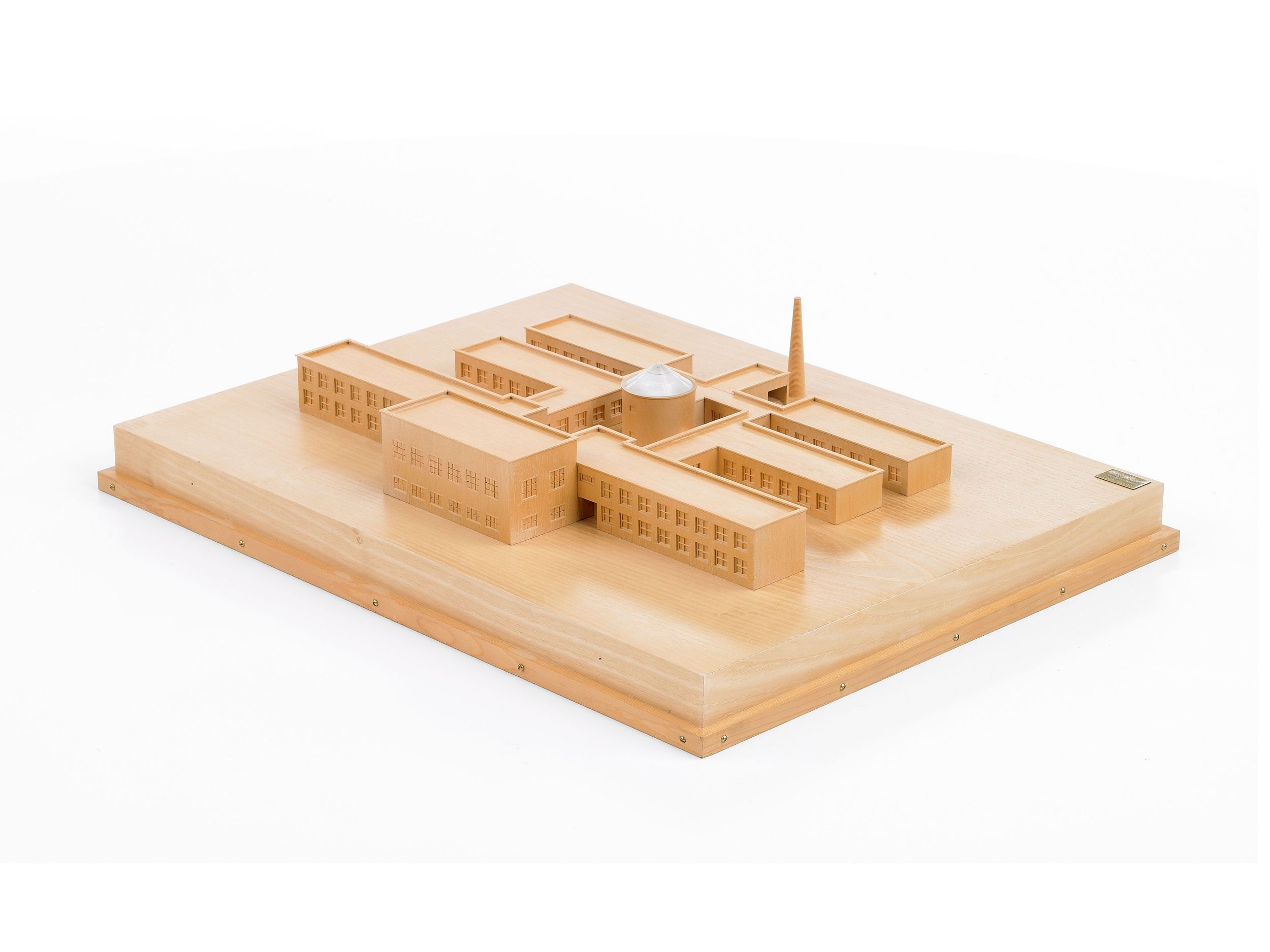
Aldo Rossi: Schools in Italy (1972 - 1976)
Model of the Salvatore Orrù primary school in Fagnano Olona/Italy: Aldo Rossi composed archetypal elements of a city, reduced to geometric bodies.
In praise of diversity - schools today
Modern school architecture is one thing above all: diverse. New variations and spatial concepts are constantly being created to make the school situation varied and stimulating. In view of declining pupil numbers as a result of the ‘Pillenknick’, new school buildings have become rarer - since the 2020s, they have been on the rise again in Germany due to increased immigration, among other things, and must meet new requirements such as sustainability, digitalisation, all-day care, integration and inclusion.
Conversion and renovation also offer opportunities to create pedagogically innovative learning and living spaces.
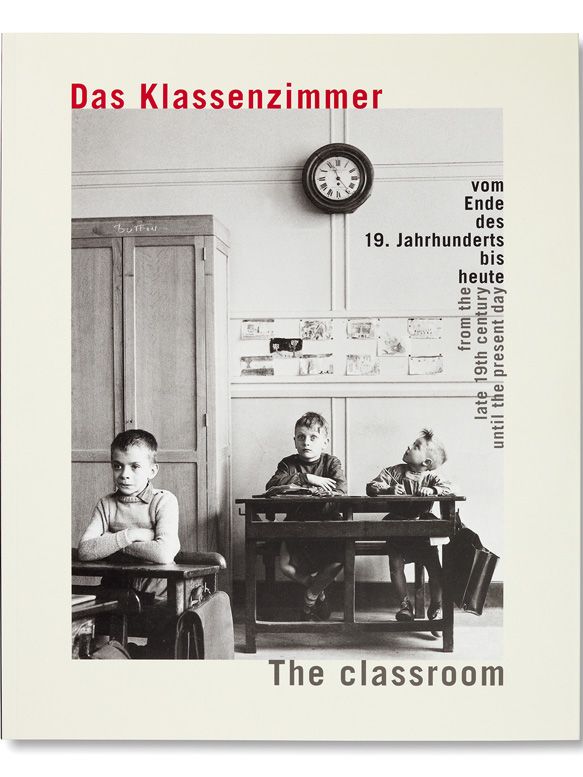
Thomas Müller, Romana Schneider:
The classroom from the late 19th century until the present day / 304 pages, approximately 900 illustrations, some in colour
Ernst Wasmuth Verlag, Tübingen Berlin, 2010

Then get in touch with us!
- Contact request Marketing
You might also be interested in this

Spread the word – arouse interest
Share this page and arouse interest in others.