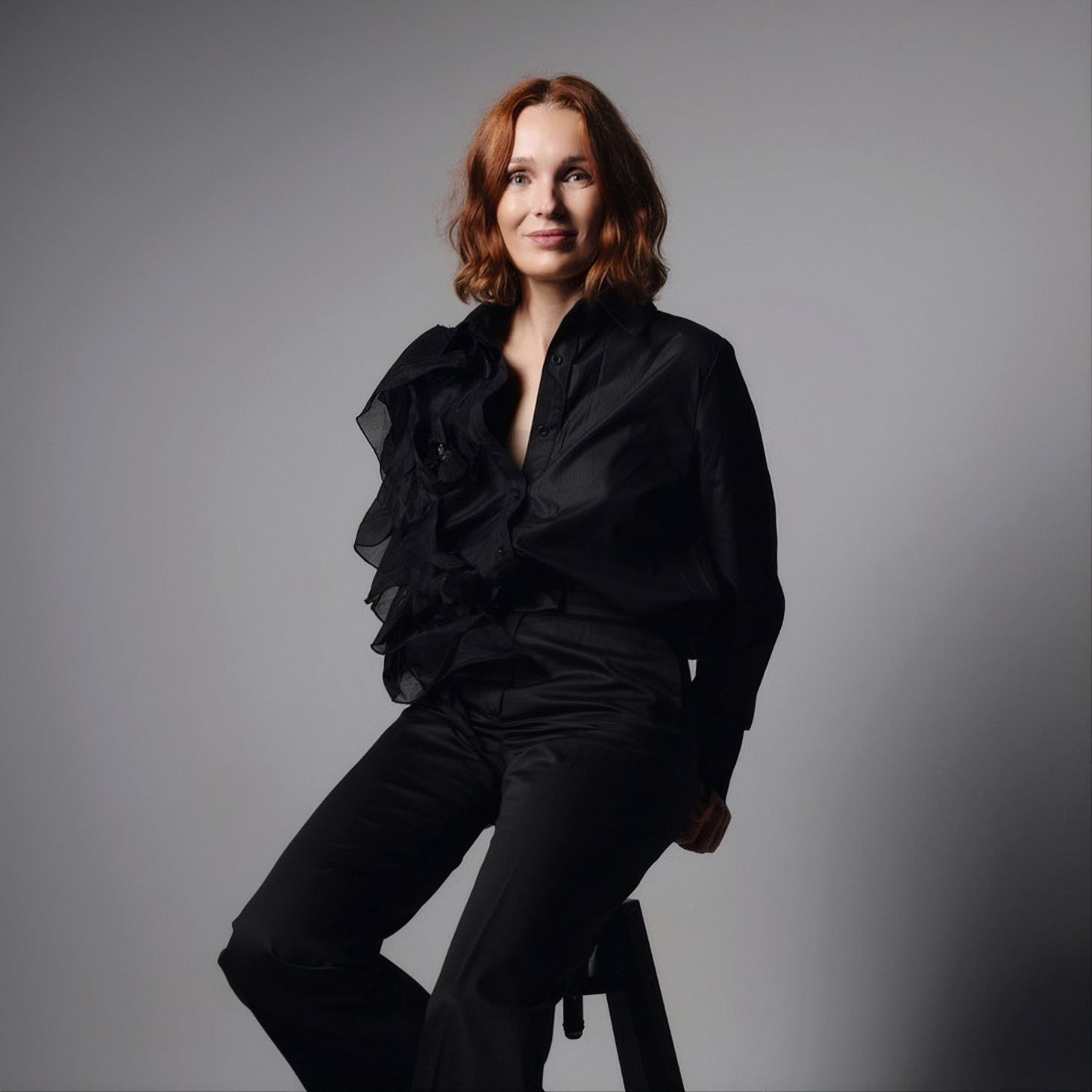
One-to-One with Franziska Karg-Röckl | VS

Last search queries

One-to-One with Franziska Karg-Röckl | VS

The Chur Model  from classroom to a learning landscape

Franziska Karg-Röckl works as a middle school teacher at Kreuzberg Primary and Middle School in Schwandorf, where she is also deputy head. For seven years she has been using the Chur model in her classes. We wanted to know precisely what this learning space concept entails and her experience of it. 
Ms Karg-Röckl, why did you introduce the Chur model to your classes?

Because it brings lots of important elements together. It is based on the self-determination of the children, self-efficacy and working together respectfully. They foster the skills that the children need, both now and later in their working lives.

With conventional teaching, we very quickly reach our limits in schools, especially with challenging classes. Every class simply runs much better with the Chur model. The pupils get on with each other better. And it makes it easier for me to teach. I don’t see myself as a mere conveyor of knowledge, but as a learning companion who inspires the pupils to act independently while standing at their sides in a supportive role.

Why did you decide on the Chur model? After all, there are other learning space models...

...where the basic idea is always the same: an open space. The pupils choose what they learn and where they sit themselves, where they work alone and where with partners. This idea of self-determination is fundamental, even though, naturally, I as the teacher specify the structures. But you have to watch out: an open learning environment doesn’t automatically imply open learning.

The one thing that is especially important to me and is central to the Chur model is that everyone is on the same level. For me, there’s nothing worse than the attitude of you do what I say, with no opportunities for participation. I want to send mature pupils out into the world, who listen, who ask questions and then express their criticism – attractively presented so that the message gets across. The Chur model, with the circle as the heart of the lessons and an open space, is ideal for this.

What does the circle achieve then?

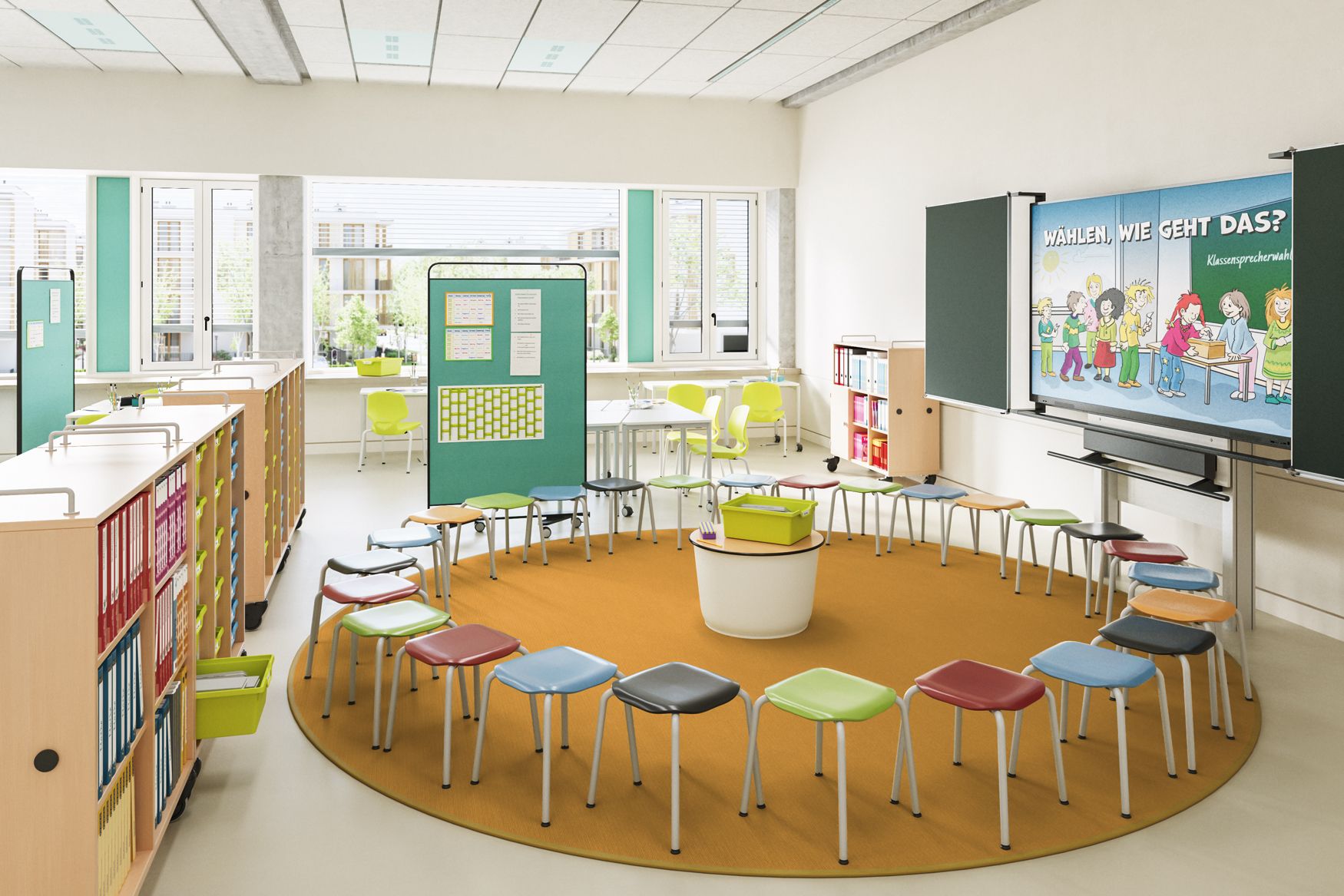
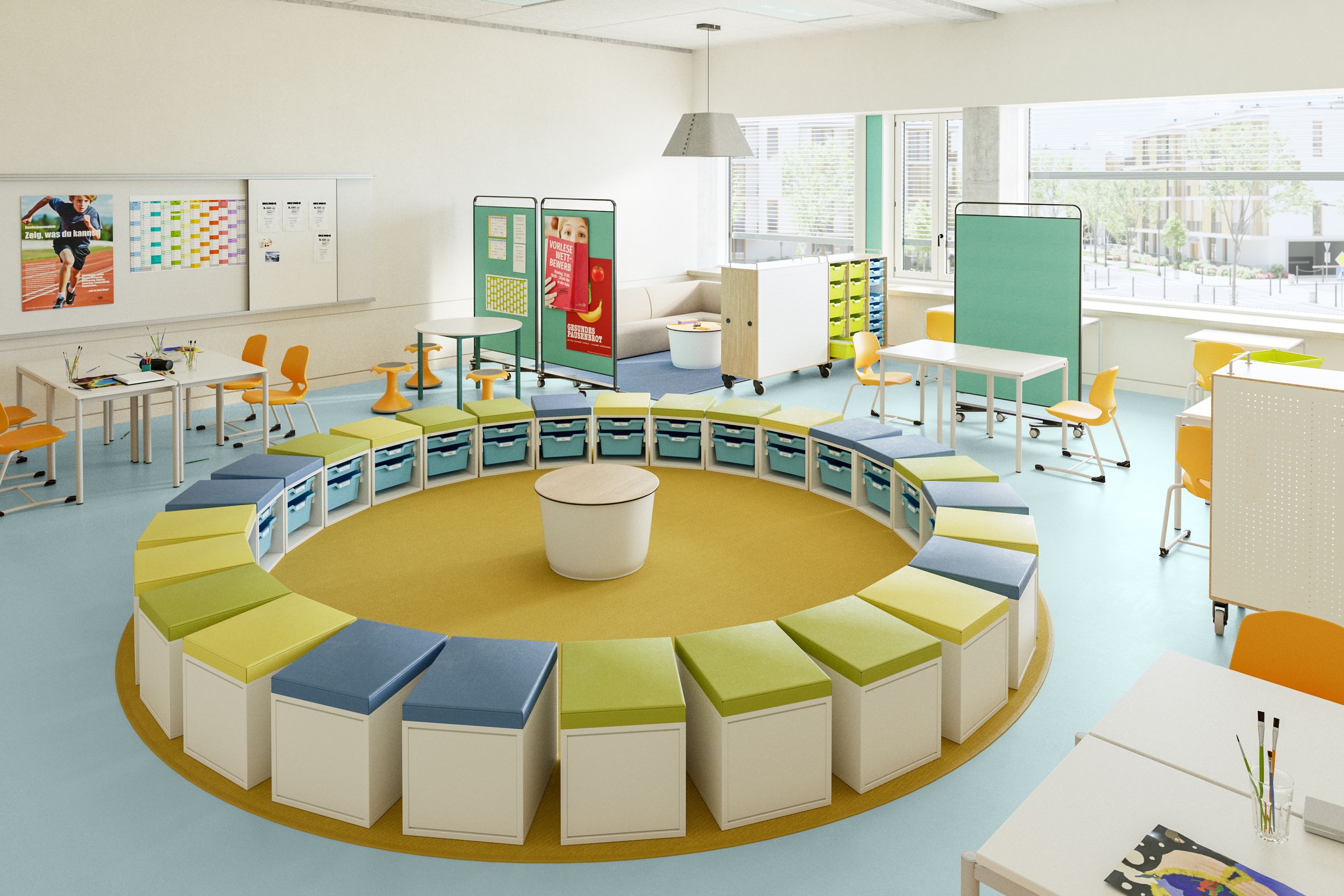
Everyone is on the same level, nobody is sitting in the second row, everyone can see everyone else, everyone gets the same level of attention, everyone is heard. That encourages active participation because everyone feels directly addressed. Social skills increase, the class becomes a team. At the same time, interactions change: if you’re looking into someone’s eyes, the psychological barrier for being unfair is higher. The class moves closer together, social behaviour improves noticeably. And I as a teacher notice: there is a connection. Everyone uses the circle for input and reflection phases, at other times, the open learning space is used.

“With the Chur model I have the opportunity to better address diversity.”

What is the make up of your current class, a Year 9?

We have a very high proportion of migrants, which affects almost every pupil in the class.  And the learning levels of the pupils differ greatly. With the Chur model I have the opportunity to better address this diversity because I can offer exercises for every level, from which the pupils choose the right ones for them to work on. I also always have the opportunity both to sit with the children who need more support and with those who are more high-performing. Because they shouldn’t be neglected, either.

What effect does this have on the pupils? 

It’s very motivating. And, what’s very important: they learn how to learn – by means of the variety of workstations, independent time allocation and from feedback. The feedback from the teacher is essential. Ultimately, I’m just a facilitator and learning supporter. 

What about the results?

They're excellent. We finish lots of things that we would not have done with conventional class teaching. At first, it takes a while for everything to settle. By Christmas, at the latest, everyone has reached a stage where they can learn independently. From then onwards, it’s a steep rise. But always with the knowledge in the background that I always have to reflect my own learning. 

Pupils can’t work independently if they don’t go to this meta level. To do this, they need instructions from me, at first at least: Where are you now? What were you able to do well? What didn’t go so well and why? What could you do next time so that you don’t run out of time? Every test result is ended with a reflection that is also incorporated in the final mark. For me, the ability to reflect is a key part of learning skills.
 

“Every class simply goes better  with the Chur model.”

.

What do the reflections include?

They vary greatly: “The subject wasn’t quite my thing.” Or: “I was fine revising, but I’ve found out that I should have worked more in lessons.” Or: “I should have practised more at home.” Pupils also notice themselves that I don’t set any homework. Life is much easier with no homework. Anyone who wants to practise can practise, and then I am happy to set work, but it is the type of work that makes sense for that pupil’s attainment level. A pupil who has mastered basic arithmetic doesn’t need to be set homework only with basic arithmetic, he or she will be given some more difficult work that is also a challenge and builds on the knowledge he or she already has.

What first steps did you take to introduce the Chur model?

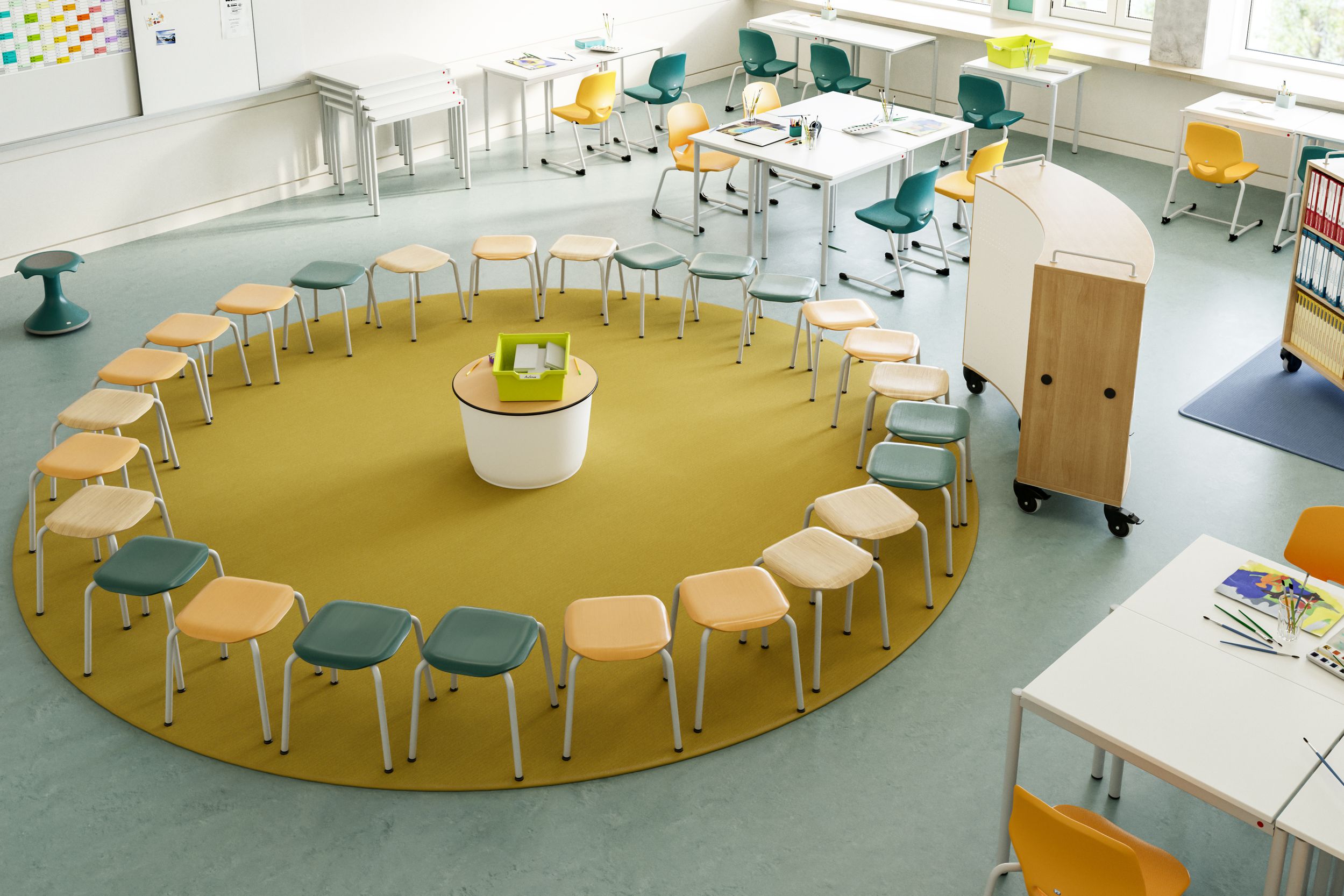
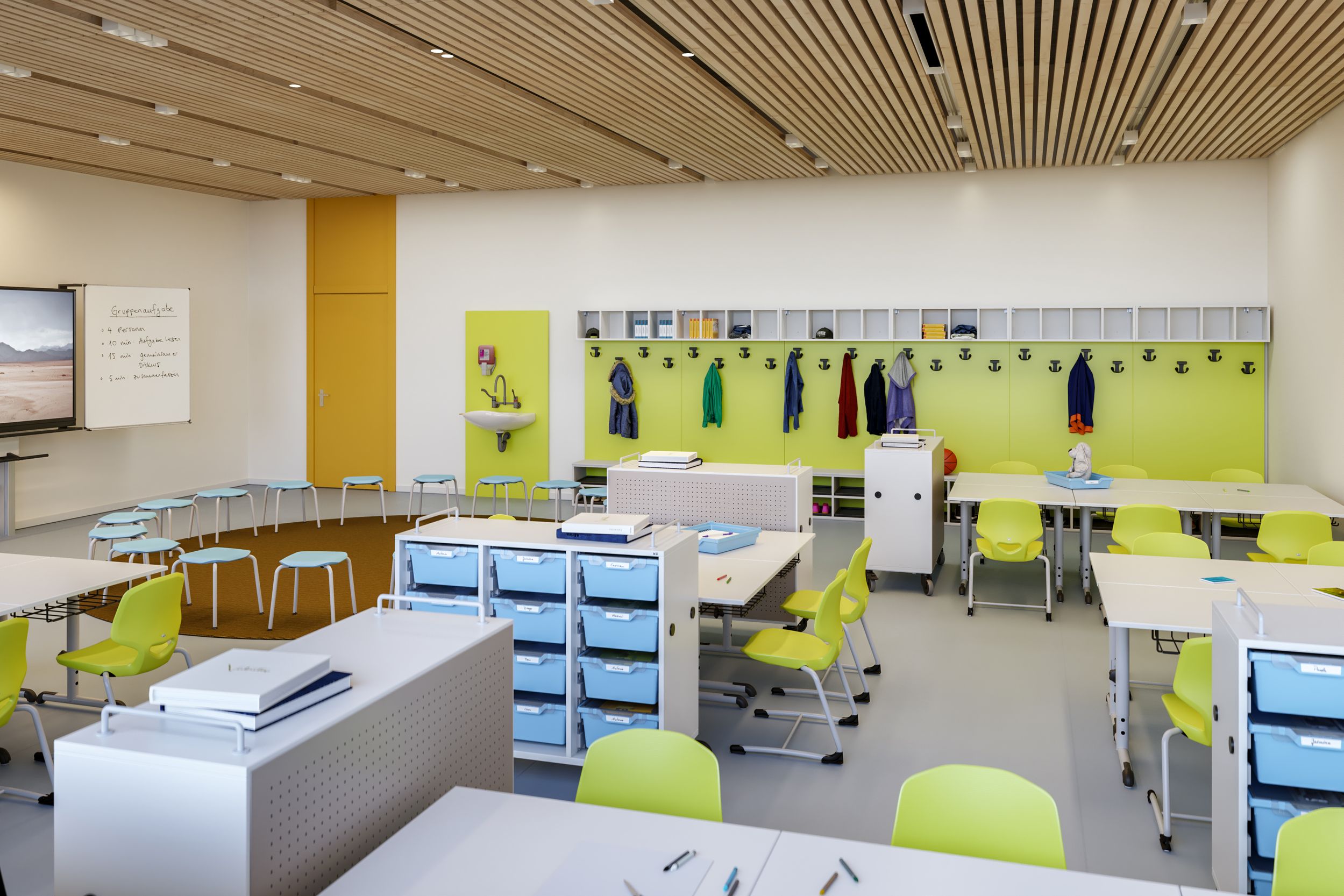
The first thing I did was buy cardboard stools, like those you see at trade fairs, to guarantee a circle of seats. Then, I rearranged my classroom in the holidays. Although our classrooms are relatively big, a circle of seats takes up a lot of space. And that is fixed, nothing is changed on it. Outside this, I created group and single work spaces. They can be moved if necessary. For example, if a colleague comes into the classroom who wants all of the children to face the front, the pupils simply turn the tables to the front. The seating circle can be included, but it remains in place. 

How did your colleagues react?

Positively. Admittedly with lots of questions, but overall positively. Not all of them followed suit straight away, but just watched for a while. Now, almost all of the teachers in our primary school have joined in. The middle school is currently following suit. Many elements have also been adopted at my previous school.

“The change to the Chur model involves a lot of work at first. The lessons have to be restructured and there is a lot of preparation. But once it is up and running, it goes well.”

.

And what’s stopping the others? 

There’s a lot of work at the start. We mustn’t underestimate that. The lessons have to be restructured and there is a lot of preparation. But once it is up and running, it goes well. Another reason is that some people don’t feel comfortable in the role of learning companion. But that is increasingly changing. Young teachers, in particular, are very open in this regard. The furniture is also a major obstacle. 

Why the furniture?

There’s no suitable furniture. Not everyone wants to pay for the stools from their own pocket. The rest of the furniture should be flexible, not take up a lot of space and allow the pupils to stand up, walk, sit down, even lounge or lie on the floor during lessons. Nevertheless, it must be possible to incorporate digital media everywhere – especially after the primary school age – and without cable clutter. Among other things, we need easy access to charging facilities. I would also find a circle comprising different stools ideal, because everyone needs something a little different. There could also be a sofa in the mix.

How did pupils and parents react?

Parents reacted positively across the board. They quickly noticed that it was doing their children good. 

The pupils found it cool at first. Then they noticed that they have to adapt, they have to learn with self-direction – even without the more general reminder in their exercise books. That was demanding at first. One said to me: Why are you getting paid when we’re doing all the work? He had identified the crux of the matter. 
 

Implementation of the Chur model in a classroom – Example

In retrospect, what would you do differently?

I wouldn’t change everything at once, but rather proceed gradually so that the children aren’t overtaxed. I had a Year 7 when I started this in my first school – everything all at once at first, but then I noticed that it was too much – including for me. This time, I introduced the model gradually, focused on the needs of the class, and that worked better. Also, I wouldn’t introduce the complete model in a final class, just parts of it. The main thing that takes time is practising the new learning methods, which is a prerequisite for independent learning. Preparing lessons is the least of it all. 

What do you advise colleagues who want to introduce the Chur model?

Inform yourselves, exchange ideas with others, then try it. But only go as far as you feel confident and adapt the model to the needs of your pupils. And if you fail: don’t give up straight away! It’s only by failing that we learn where we need to make adjustments. 

Thank you very much for the interview.
 

The Chur model...

... is a spatial educational concept that was developed at Stadtschule Chur in 2010. It is based on four elements:

  • The classroom is rearranged with an input circle and desks facing in different directions.
  • At the start of a learning unit, there is a brief input phase in the circle for everyone.
  • The pupils learn from completing learning exercises at different levels. 

The children choose an exercise themselves and the right desk where they can work on the exercise alone or with others.

The model can be implemented in any room and shaped individually by the teacher.

Hear more about the 'Churermodel in the podcast with Reto Thöny' (German)
A flexible elementary school learning space based on the Churer model, featuring colorful stools arranged in a circle, mobile shelving units, a portable bulletin board, and an interactive display from VS

Elementary school learning space based on the Chur model, featuring a circular ChurerBox seating arrangement, Hokki rocking chairs, mobile tables, and movable room dividers from VS

Flexible elementary school learning space featuring a circle of stools, stackable tables, cantilever chairs, and a mobile bookshelf from VS

Spread the word – arouse interest

Share this page and arouse interest in others.