
Right in the middle of the topic instead of just being there
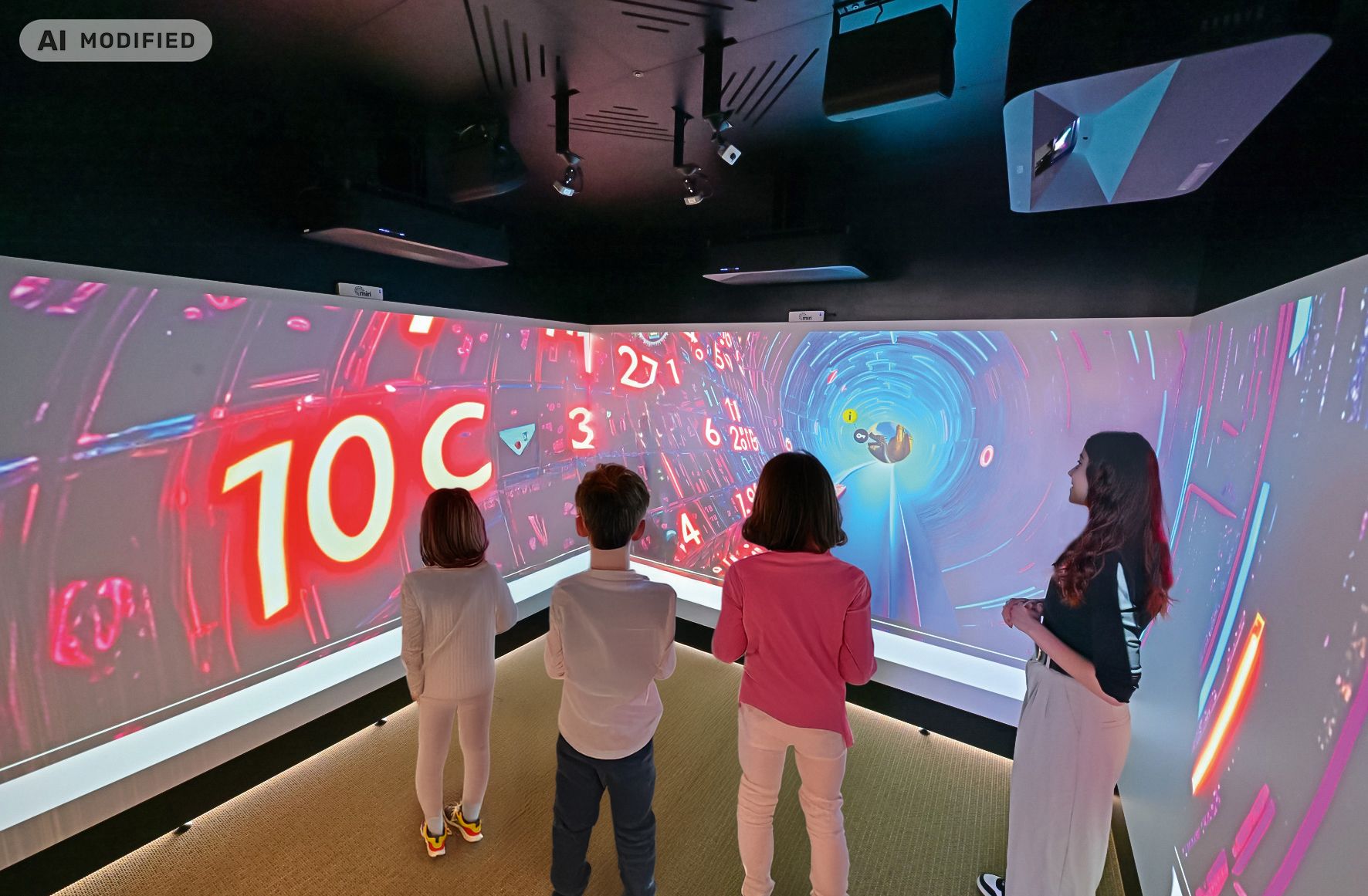
Imagine going on an expedition to the rainforest with your class – without leaving the school building. Or accompanying a seminar group to a virtual nuclear power plant to analyse potential hazards – without any risk whatsoever. Sounds like science fiction? Welcome to the world of immersive learning.
What exactly is immersive learning?
The term comes from the verb ‘to immerse,’ which means ‘to submerge.’ With this method, learners are completely immersed in a virtual environment that reflects the real or simulated conditions of a specific topic. The real world recedes into the background. External stimuli that could distract learners are minimised – they are completely focused on their learning object. They solve tasks by interacting with the virtual environment, either alone or in small groups.
The immersive experience in virtual space allows learners to acquire more than just theoretical knowledge. They can also develop practical skills and problem-solving abilities that are relevant in real-life contexts. Learning processes start automatically – emotionally, physically and intellectually. This method is therefore suitable for all age groups and subject areas, from school to training and further education.
Why is it so effective?
- Depth instead of surface: People who experience content instead of just hearing or reading it retain knowledge more effectively.
- Motivation through self-efficacy: In the virtual world, learners can act, try things out, fail – and simply try again.
- Confidence in learning: Mistakes are allowed. They don't hurt anyone, but lead directly to learning outcomes.
- Creativity and critical thinking: Complex challenges require flexible solutions – ideal for creative minds and problem solvers.
- Realistic scenarios: Whether surgical training, behaviour in crisis situations or learning foreign languages abroad – everything can be experienced.
- Repeatability: Scenarios can be played through as often as desired. Learning can take as long as it takes.
- Learning becomes an experience rather than consumption.
And what are the drawbacks?
Of course, not everything is rosy. The technology costs money, both to purchase and to maintain. Schools and continuing education providers need the right infrastructure – and the necessary expertise. Not every teacher and learner feels immediately comfortable in a virtual environment.
Another issue is that there is often a lack of suitable, pedagogically sound content that fits seamlessly into curricula or continuing education concepts. A lot of pioneering work is needed here – but there is also room for creative minds and new educational initiatives.
Where can immersive learning be used effectively?

At school
Natural sciences, history, languages, geography – everything comes to life when you are right in the middle of it.

In vocational education and training
Training courses and workshops, whether in skilled trades, technology or administration, simulations, data visualisation – immersive environments make it possible.
In extracurricular education
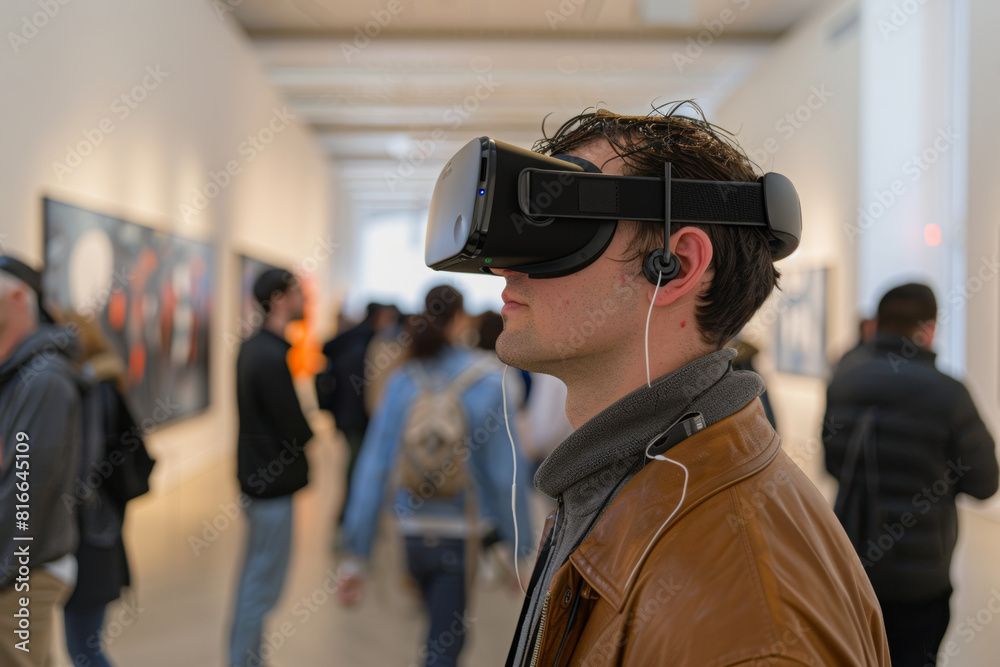
Museums and exhibitions can create impressive learning experiences with immersive learning spaces – for example, through time travel or allowing visitors to discover natural phenomena.
Education that touches the heart lasts and learning that is fun is effective.
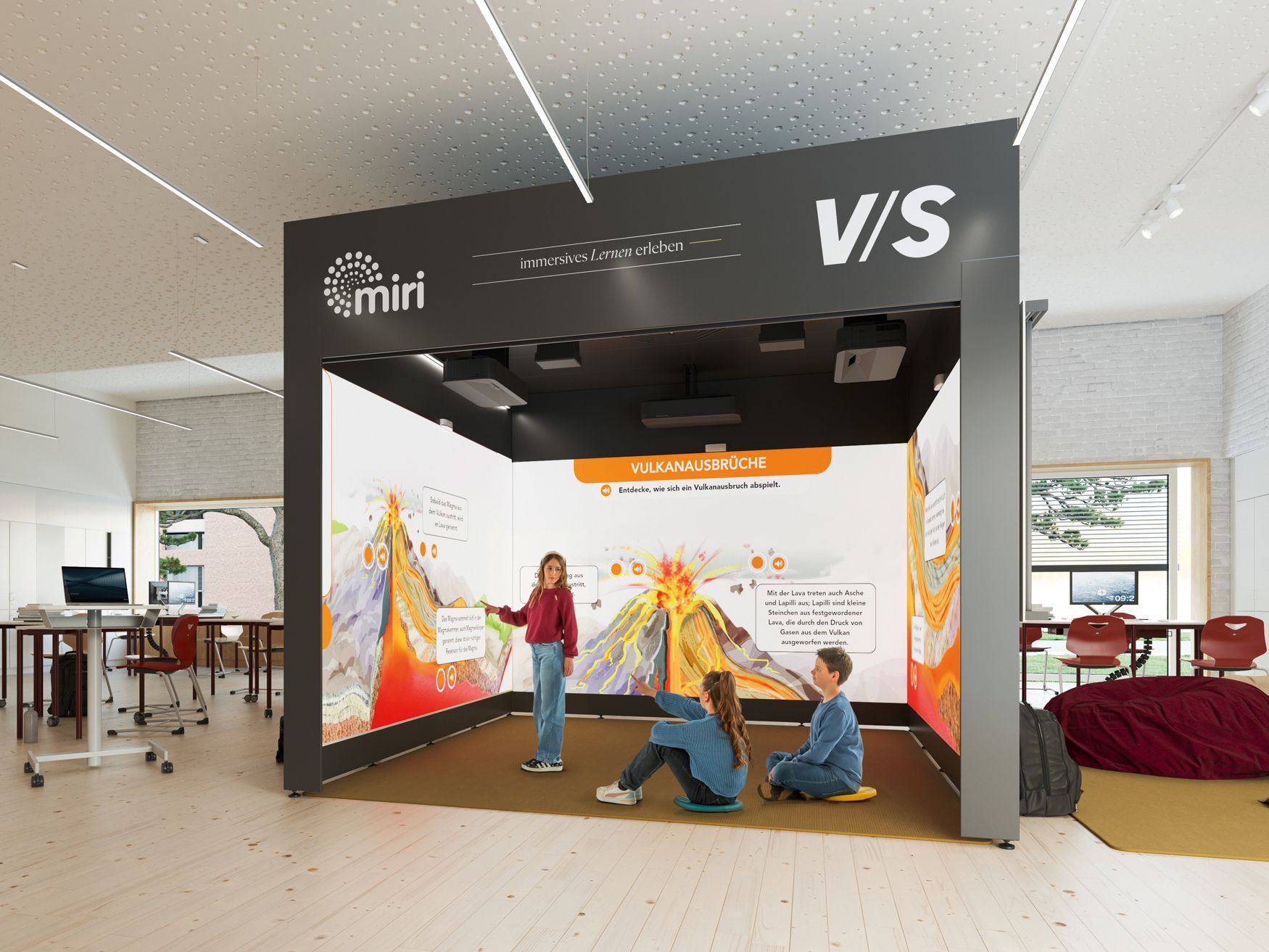
Our highlight: the immersive learning house miri
For young people, immersive learning offers the opportunity to understand complex topics such as physics, chemistry or biology in a vivid way. Interactive simulations make it possible to carry out experiments that would be too dangerous or too expensive in reality. This not only promotes understanding, but also critical thinking.
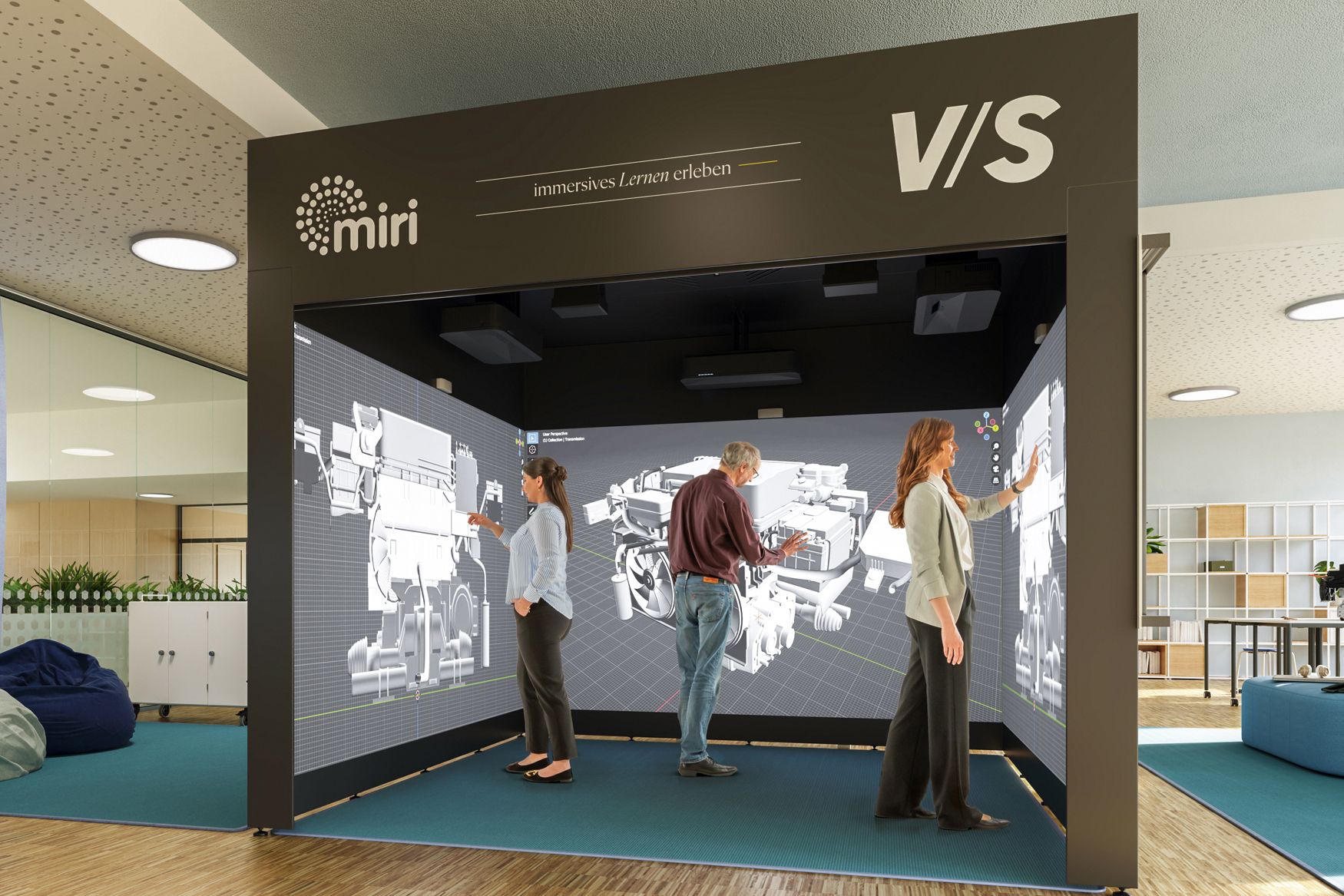
Learning gains from immersive learning at a glance
Greater commitment: Those who are part of the story do not remain passive.
Faster knowledge acquisition: Complex relationships become understandable through personal experience.
Better memory retention: Experiences are more deeply ingrained than what is learned.
Transferability: What is learned virtually can be better transferred to real-life situations.
Independence and motivation: Learners take responsibility for their own learning process.

Please do not hesitate to contact us if you have any questions.
You might also be interested in



Spread the word – arouse interest
Share this page and arouse interest in others.